
he rift between LoL China Team and South Korea Team isn't just a storyline—it's the engine that has driven competitive League of Legends for over a decade. Look at the World Championship finals: South Korea's T1 (formerly SKT) has hoisted the Summoner's Cup four times, while China's Invictus Gaming and FunPlus Phoenix each claimed one, and EDG added another in 2021. Those numbers alone tell you this is the matchup every fan circles on the calendar. When a LoL China Team vs. South Korea Team series goes to a deciding game, the viewership numbers routinely break regional records. That's not hype;that's a genuine cultural collision.What separates these two regions isn't mechanics—it's philosophy. South Korean teams historically built around suffocating vision control and disciplined macro play. Think of Samsung White in 2014, methodically choking opponents out of the map. Chinese squads, by contrast, lean into chaotic skirmishing and early-game aggression. Royal Never Give Up's peak years were defined by Uzi's relentless lane pressure and teamfights that felt like bar brawls. I've watched countless LoL China Team vs. South Korea Team matches where the Chinese side forces a fight at dragon pit that no spreadsheet would recommend。and somehow it works. That unpredictability is the appeal. It's also the frustration.Coaching and infrastructure play a bigger role than most casual viewers realize. South Korea's esports ecosystem matured earlier, with team houses。sports psychologists, and rigorous scrim schedules baked in from the start. China caught up fast—and in some ways surpassed it. The LPL's franchise model brought in serious capital, attracting Korean imports like Imp, Scout, and Kanavi, who then shared their methods with local players. The result?A LoL China Team vs. South Korea Team matchup in 2023 looks nothing like one from 2015. The gap in macro discipline has narrowed to a sliver. Korean teams still draft more conservatively, but Chinese teams now punish hesitation with surgical precision.Individual player narratives add texture. Faker remains the eternal benchmark—his 2023 Worlds run with T1 against Weibo Gaming was a masterclass in controlling tempo. On the Chinese side, players like Knight and Bin carry a different kind of swagger, one that thrives on highlight-reel outplays. When a LoL China Team vs. South Korea Team game hinges on a single mid-lane fight, you can feel the stylistic clash in every ability cast. Korean fans expect flawless execution;
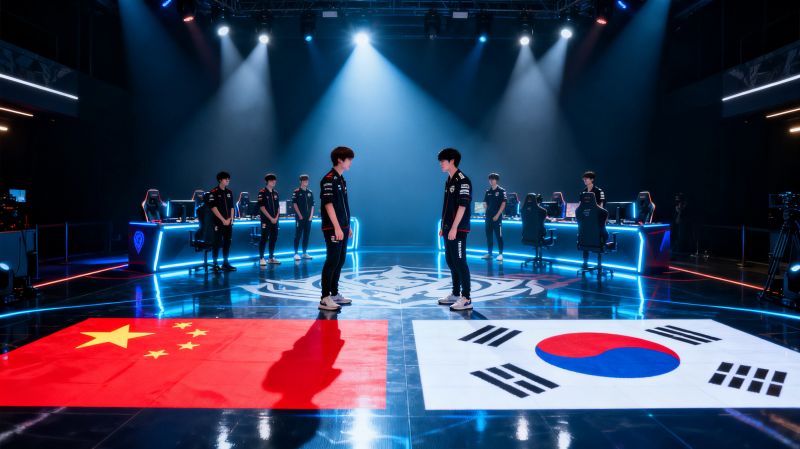
Chinese fans crave explosive brilliance. Both are right, and both are wrong。depending on the patch.What's next?The Asian Games and MSI keep this rivalry fresh。
but the real battleground is grassroots. China's player base dwarfs South Korea's, yet Korea's solo queue remains a proving ground for aspiring pros worldwide. I'd argue the LoL China Team vs. South Korea Team dynamic will stay competitive as long as both regions keep exporting talent and importing ideas. The moment one side stops adapting, the other will run away with it. For now, every international tournament feels like a coin flip—and that's exactly why we watch.